




Port Crane Relocation and Dismantling: Planning for Safe Execution
October 21, 2026
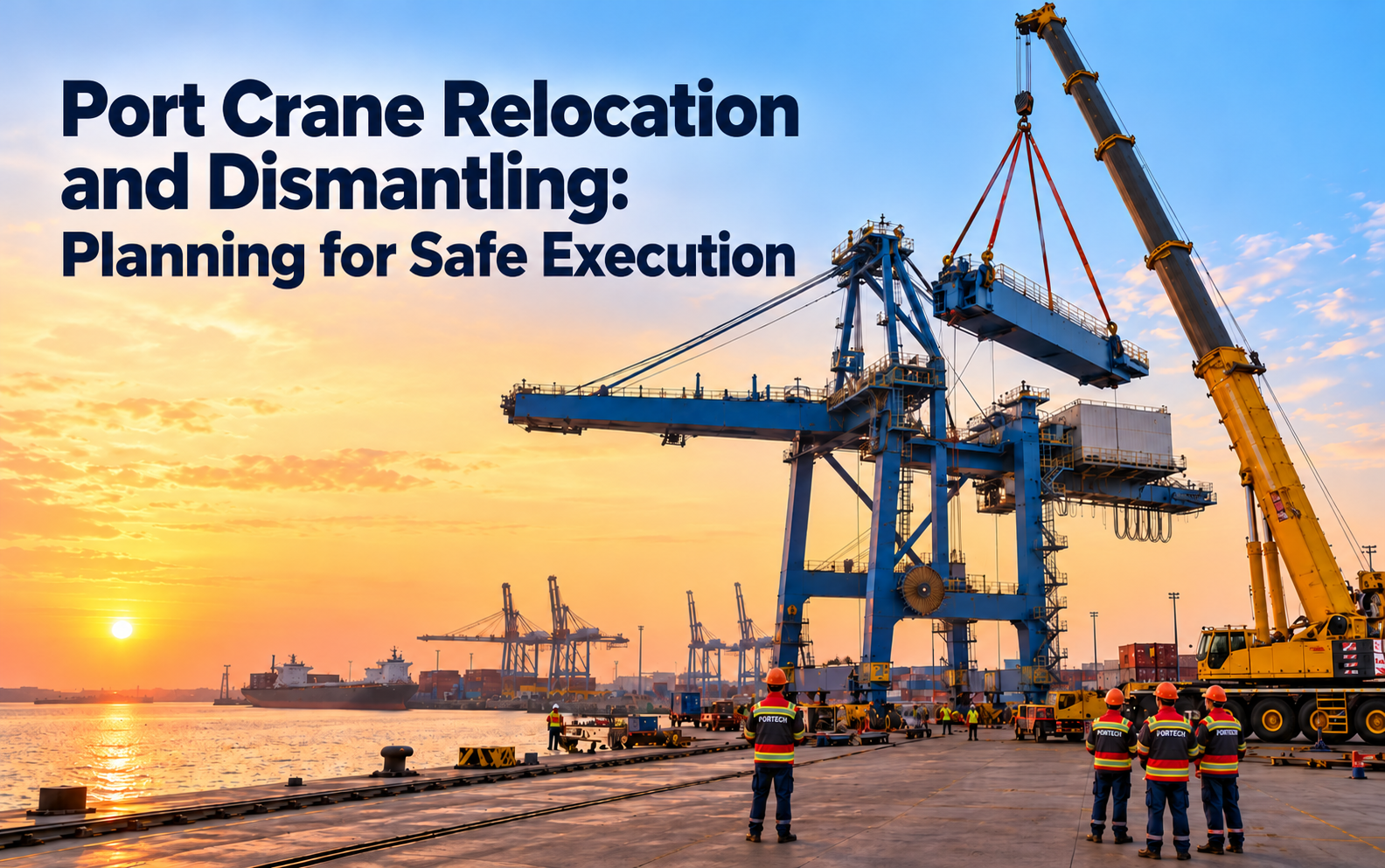
Relocating or dismantling a port crane is one of the most complex operations a terminal can undertake. The crane that has been a fixed, load-bearing asset for years must now be treated as a temporary structure, one that becomes progressively less stable with each component removed, each connection cut, each section lifted away.
The margin for error is narrow. Structural collapse during partial dismantling, uncontrolled loads, quay failure under concentrated point loads, and conflicts with live terminal operations are the risks that claim projects when planning is inadequate. The projects that go well are almost always the ones where engineering came before execution.
The First Priority: Make the Crane Safe
Before a single bolt is removed, a thorough site and asset survey is required. This covers the crane's type, dimensions, weight distribution, and structural condition. Rails, foundations, adjacent assets, utility connections, and access routes all need to be assessed.
A critical early decision is the mode of relocation: assembled, partly dismantled, or fully dismantled. Moving large assemblies reduces reassembly time but demands structural analysis, temporary reinforcement, and sea fastening if the move involves water transport. Getting this decision wrong at the planning stage creates significant problems during execution.
Engineering the Lift
Every major lift in a dismantling or relocation project needs an engineered lift study. A standard rigging checklist is not sufficient.
Structural engineers need to model the crane to establish accurate component weights, centres of gravity, and lifting points — and critically, to verify that the remaining structure stays stable after each cut or lift. This analysis drives the dismantling sequence. Working without it means making assumptions about load paths and stability that may not hold in the field.
Key engineering deliverables for any crane relocation project include a detailed dismantling and reassembly sequence with temporary supports and bracing specified at every stage, lift plans covering rigging configuration and ground conditions, transport engineering for SPMT selection and sea fastening where applicable, and defined weather operating limits for wind, visibility, and sea state.
Controlling the Dismantling Sequence
The dismantling sequence must follow the reverse of a structurally safe erection sequence. Components are isolated and lowered progressively. Cuts to primary structural members are only made after temporary supports have been installed and the load path of the remaining structure has been verified.
In practice, this means: confirm the crane's actual as-built condition before anything else. Isolate all energy sources, electrical, hydraulic, pneumatic, fuel, and drain fluids. Remove operational components and attachments in a planned order. Install temporary bracing before cutting. Cut, rig, lift, and lower each section only after its support condition is confirmed. Segregate materials for compliant disposal or reuse.
No step proceeds without a verified load path and an approved method statement. This principle is what separates controlled dismantling from improvised demolition.
Managing the Live Port Interface
Port crane removals rarely happen in isolation. They happen beside operating berths, active cargo handling, vessel movements, and restricted quay space. This creates a coordination challenge that is as important as the engineering one.
A single point of coordination with the terminal, port authority, marine control, utility providers, and contractors needs to be established before work begins. Exclusion zones, vehicle and pedestrian routes, communication protocols, and emergency arrangements must be defined and agreed upon before the first lift. Port authority approvals for crane positioning, heavy lifts, and relevant permits need to be in place.
Safety Controls That Cannot Be Negotiated
Competent personnel across every role — riggers, crane operators, signallers, supervisors — with verified certifications and site-specific inductions. A documented permit-to-work system for hot work, lifting, working at height, confined spaces, and energy isolation. Engineered fall protection and safe access platforms for work on the crane structure. Rigging and ground bearing inspections before each shift. An automatic work stop when wind speed, visibility, or sea conditions exceed approved limits.
A pre-lift briefing before every significant lift, covering the exact sequence, loads, rigging, communications, exclusion zone, and contingency actions.
Reinstallation and Return to Service
At the destination, foundation adequacy, rail alignment, gauge, clearances, and structural interfaces must all be verified before erection begins. After reassembly, inspection, load testing, and formal commissioning are required before the crane returns to service. Reinstallation is not complete when the crane is standing — it is complete when it has been tested, documented, and handed over by a competent person.
Crane relocation and dismantling projects succeed when engineering and coordination are treated with the same rigour as the physical work. At PORTECH, we approach every project of this kind with detailed structural assessment, engineered lift planning, and tight coordination with port operations from the feasibility stage through to handover.